

Factory Tour Content and LinkedIn Thought Leadership for B2B Manufacturers
 Anjali Sharmamanufacturing9 min readMay 14, 2026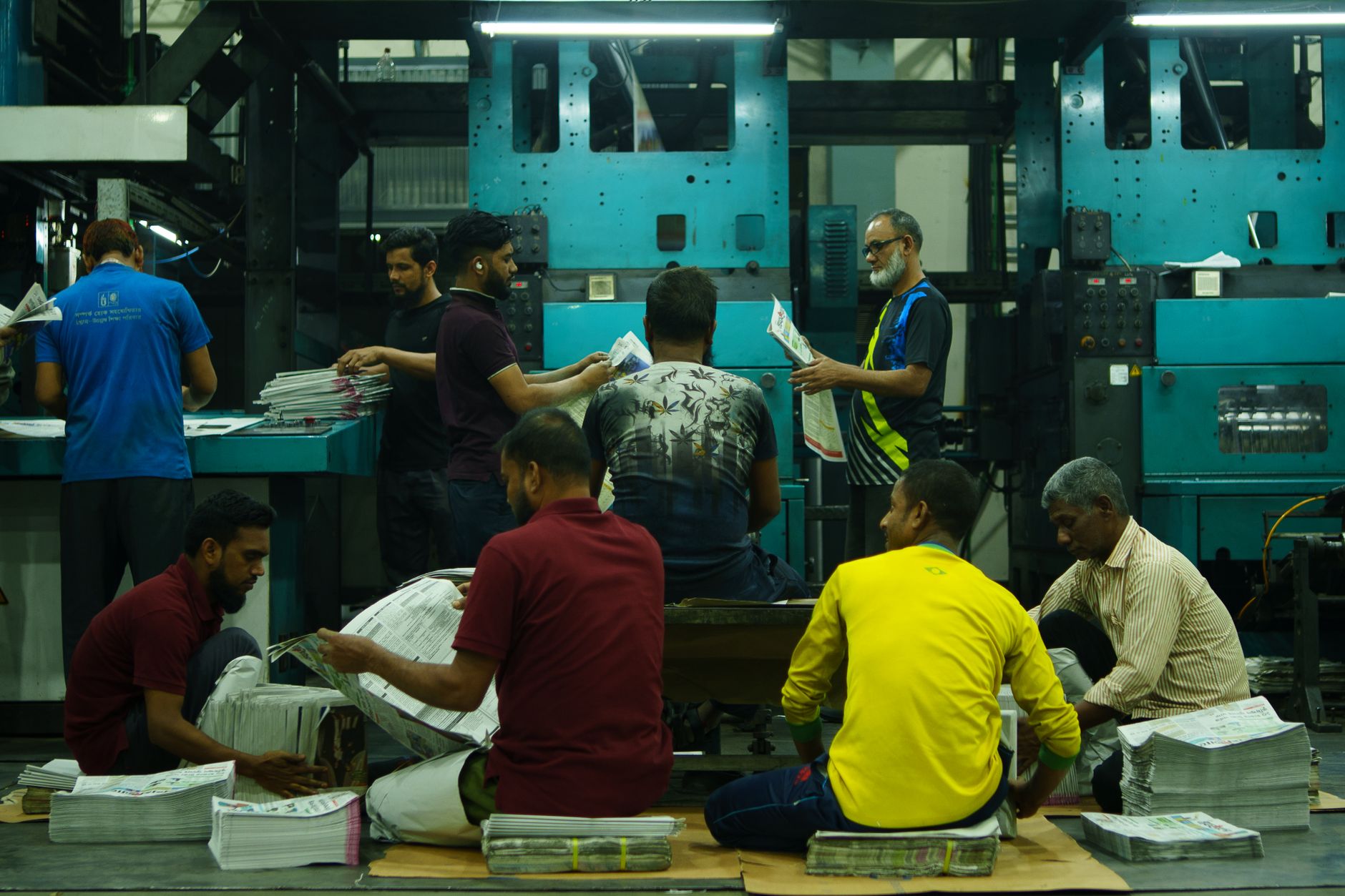
LinkedIn as the new front door for B2B India
ndian B2B procurement has changed in a quiet but decisive way over the past four years. Procurement heads — typically the 35-50 year old decision-makers at distributor companies, machinery dealerships, and industrial component buyers — now use LinkedIn as their primary research tool. They search by sub-category, they read articles to evaluate which manufacturers are technically credible, they look at factory tours to evaluate operational scale, and they DM founders directly when they want to start a conversation. Manufacturers without a LinkedIn presence are evaluated as not-serious or worse, unknown. Trade shows are still relevant; LinkedIn is the persistent storefront between trade shows.
The factory tour reel — a 90-second format
The single highest-converting B2B content format we have observed is the 90-second factory tour reel: the founder walks through a working factory, names the production line and capacity, describes a specific quality control step in detail, shows a finished batch ready for dispatch, and closes with a single line on what distinguishes the operation. The format works because it gives a procurement head five distinct credibility signals in 90 seconds — operational scale, technical depth, quality discipline, fulfilment capability, and founder authenticity. Manufacturers that ship one of these per month build a recognisable industrial-credibility footprint within twelve months.
- Open on the founder walking into the factory floor — establishes authenticity
- Production line named with capacity (units per day or tonnes per month)
- Specific quality control step described — not a generic 'we ensure quality'
- Finished batch shown ready for dispatch — proves the fulfilment claim
- Founder closing line on what distinguishes the operation — competitive positioning in one sentence
- Caption with technical specifications and a clear DM-to-discuss CTA
Weekly LinkedIn articles that distributors actually read
The LinkedIn article format that procurement heads actually open and read has a specific shape: 700-1000 words, written in plain language by the founder (with editorial cleanup), focused on a specific industry problem rather than the company's own products, citing actual data where possible, and concluding with a perspective that demonstrates technical depth. Articles structured as 'how our factory solved X' underperform articles structured as 'why the Indian industrial customer faces problem X and what manufacturers should consider'. The first reads as marketing; the second reads as authority. Manufacturers writing in the second register sustainably build inbound demand.
Founder-voice content vs corporate communications
B2B LinkedIn content from manufacturer accounts splits cleanly into two registers: founder voice (first-person, opinions, specific anecdotes) and corporate communications (third-person, sanitized, press-release-flavored). The founder-voice register outperforms by 4-6x on engagement and consistently higher on actual qualified DMs. The reason is structural: procurement heads want to evaluate the person they will eventually negotiate with, not the company's marketing team. Manufacturers that delegate LinkedIn content to a marketing agency typically end up in the underperforming corporate-communications register without realising they have made the trade-off.
Distributor case-study content with consent
The most credible content for a B2B manufacturer is a distributor case study: a specific named distributor company describes the problem they were trying to solve, how the manufacturer helped, and the measurable outcome. The constraint is consent — distributors are often reluctant to be named publicly because they do not want their competitors knowing what they buy and from whom. The pattern that works: ask explicitly during the relationship, offer to anonymize the company name while keeping the industry and region (e.g. 'a Coimbatore-based machine-tools distributor'), and share a draft for approval before publishing. Manufacturers that build a library of 12-15 such case studies have a content backbone that compounds over years.
Using social to amplify trade-show presence
Trade shows still drive a meaningful share of B2B India lead generation — but social content amplifies their return. The pattern that works: a pre-show LinkedIn article on which industry trends the manufacturer will be looking for at the show, daily live posts from the booth with founder commentary on what they are seeing, a post-show summary article on the three most significant conversations the founder had. This sequence turns a four-day trade show into six weeks of content. Manufacturers that go to a trade show without a social amplification plan are leaving a substantial portion of the show's value on the table.